Guide · 6 min read
Shock leader basics
Why braid needs a leader, nylon or fluorocarbon, how heavy and how long, and the knots that hold. Everything you need before tying your next leader.
PE braid changed fishing: thin, strong and with almost no stretch, it lets you feel every touch and cast further. But on its own it has three weaknesses, and a shock leader fixes all of them.
Why braid needs a leader
- Abrasion. Braid is made of fine fibres. Drag it across coral, rock, a fish’s gill plate or a mouthful of teeth and it can part in a moment. A leader is a thicker, tougher section where the contact happens.
- Shock. Braid barely stretches, so a sudden head shake, a hard strike or a fish surging at the boat goes straight to the knots and hooks. A leader adds a little give.
- Visibility. Braid is opaque and often brightly coloured. A clear leader is far harder for a fish to see, which matters in clear water and with wary species.
There is a practical bonus too: a heavy leader is something you can grab or wind onto the reel at the boat without slicing your hands on braid.
Nylon or fluorocarbon?
Both work. They behave differently.
| Nylon | Fluorocarbon | |
|---|---|---|
| In the water | Lighter, suspends | Denser, sinks |
| Stretch | More: absorbs shock | Less: more direct feel |
| Abrasion | Good | Generally better |
| Visibility | Low | Lower: its light refraction is close to water’s |
| Handling | Supple, easier knots | Stiffer, knots need care |
| Price | Lower | Higher |
Rules of thumb:
- Popping and stickbaits: nylon. It doesn’t pull the lure’s nose down and its stretch takes the violence out of a GT strike.
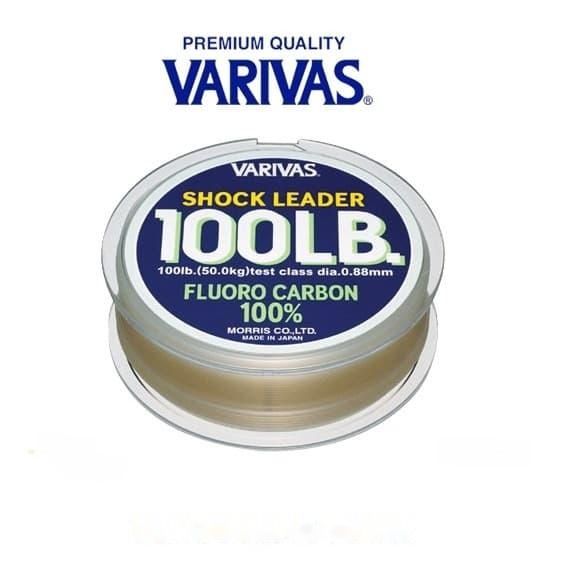
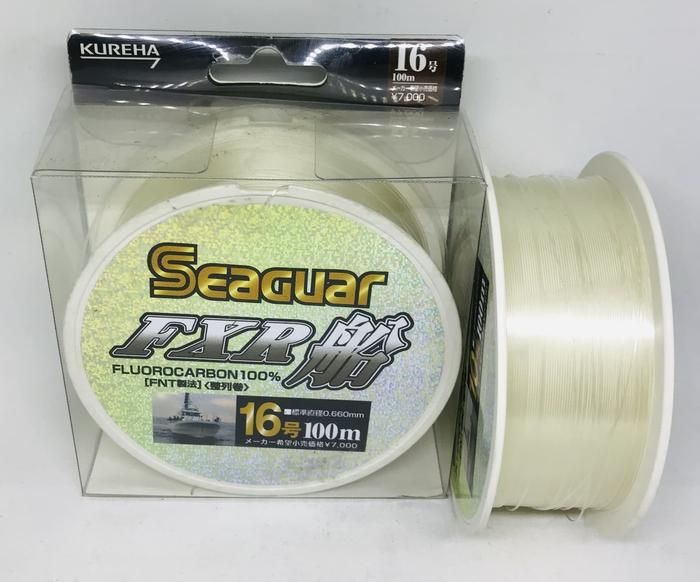
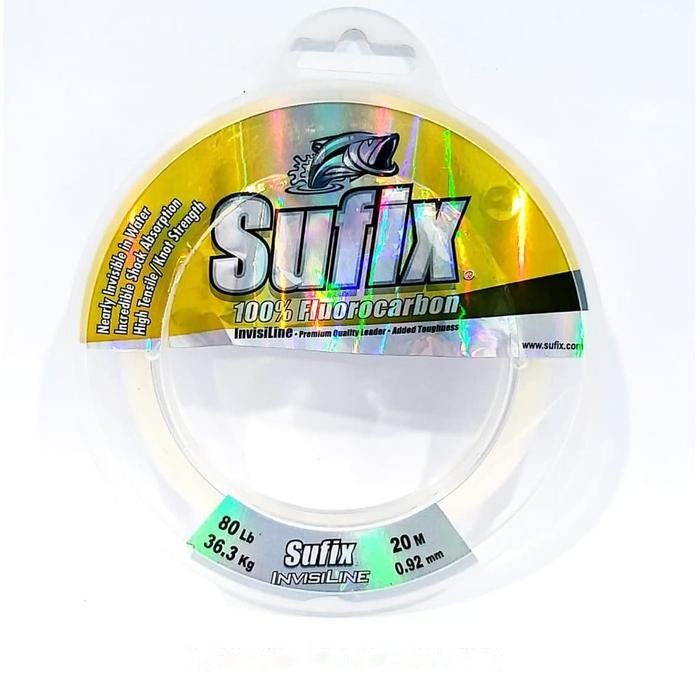
- Jigging, bottom fishing and clear water: fluorocarbon. It sinks with the jig, resists rubbing on structure and is the least visible.
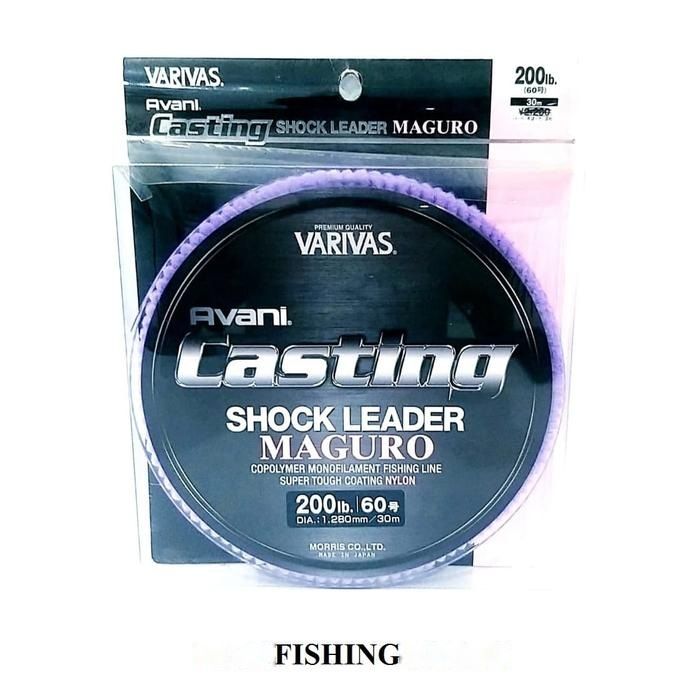
- Casting leaders made for knots, like Varivas Avani Maguro, add a tough coating designed for friction knots such as the FG and PR.
How heavy?
Match the leader to your braid and to what you’ll rub against. A rough starting point:
| Braid | Leader |
|---|---|
| PE 0.8–1.5 | about 16–25 lb |
| PE 2–3 | about 30–50 lb |
| PE 4–6 | about 60–100 lb |
| PE 8–10 | about 130–200 lb |
Go heavier over sharp reef or for toothy fish like Spanish mackerel and barracuda (or add a short wire trace). Go lighter in clear water for shy fish, accepting more risk.
How long?
- Casting (popping, spinning): roughly one to one and a half rod lengths. Long enough to protect against the fish, short enough that the knot isn’t battering the guides on every cast. Many anglers leave a few turns of leader on the spool when casting.
- Jigging: often 3–5 m, longer over rough bottom where the line runs against structure.
Knots that hold
- FG knot: slim and very strong; it slides through the guides smoothly. The standard for braid to leader. Takes practice, so tie a few at home before the trip.
- PR bobbin knot: tied with a bobbin tool; excellent for heavy leaders.
- Double uni: quick and easy, fine for lighter lines, but bulkier and not as strong as an FG.
Whatever you tie: wet the knot, pull it down slowly and firmly, and test it with a hard pull before you fish it.
Check it, cut it, retie it
After every fish, and every time the line has touched reef, run the last metre of leader between your fingers. If it feels rough, flattened or kinked, cut above the damage and retie. Most “the line just broke” stories begin with a nicked leader nobody checked.
Unsure which leader matches your setup? Bring your reel to the store and we’ll help you pick the strength and length.